Why a building firm would publish its doubts
Architects and builders are paid to sound certain. We think the certainty is part of the problem, so this site starts from the first line of our tenets.

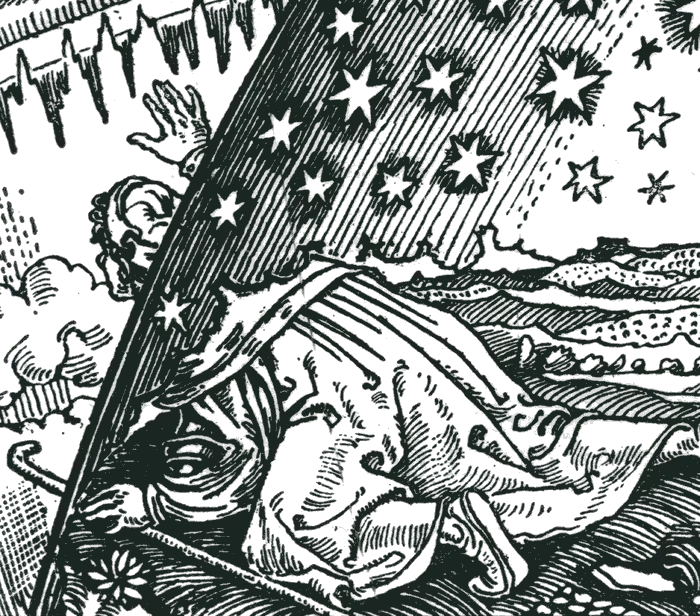 ?what should be
The first tenet we wrote down for ourselves is four words long: We don’t know everything. The second is We treasure curiosity.
That is an odd way to start a building firm. Buildings are expensive and slow, and nobody wants to hear “we’re not sure” from the people holding the drawings. So, the industry has learned to sound sure. It repeats what worked last time and calls that experience.
The cost of sounding sure
The trouble is how “worked” gets measured. A building works if it sells, rents or passes inspection. Very few are checked after people move in. Did the heating use what the model said it would? Did anyone sit in the courtyard? Did the siding sold as durable last?
Mostly, nobody goes back to look. An industry that doesn’t look can stay confident for a very long time.
The Zen teacher Shunryu Suzuki put it this way: “In the beginner’s mind there are many possibilities, but in the expert’s mind there are few.”1 We try to come to each project as beginners, asking what should be, next to what is.
An industry that doesn’t look can stay confident for a very long time.
What we do about it
We treat every project as an experiment and run it the way a laboratory would:
- State the goal in plain words.
- Set a baseline: what the usual way costs and yields.
- Write a hypothesis that could turn out wrong.
- Measure the result, counted honestly.
- Publish the conclusion, failures included.
We can work this way because of how the studio is set up. We develop, design and build, and then we keep what we make. We are still there in the tenth winter, when the truth about a building has come out.
What you will find here
- Gleanings, every Monday. The week’s news in building, in AI and in the wider world, each item read against our six themes and ending in a question.
- Questions. The habits of our industry that we are testing, with where we stand and what would change our mind. One already carries the label “Changed our mind.” We expect more.
- Essays like this one, each with its sources.
- What we got wrong. A running list. It is empty today. It won’t stay that way.
What we ask of you
Copy anything here that is useful. The words on this site are free to reuse and adapt. If someone builds on our methods, that is the plan working.
And tell us where we are wrong. Another of our tenets says our aim is not to save the world, but to improve it to benefit as many as possible. Some improvement is better than none. We would rather be corrected in public than be quietly mistaken.
Sources and notes
- Shunryu Suzuki, Zen Mind, Beginner’s Mind, 1970. ↩
Drafted with AI assistance from the studio's working papers, then read, corrected and approved by Keith Cash, co-founder. Found a mistake? Tell us.