
The greenest new home may be the old house, kept
Seattle now allows four homes on most residential lots. The usual first step is to clear the lot. We think that step is usually a mistake.

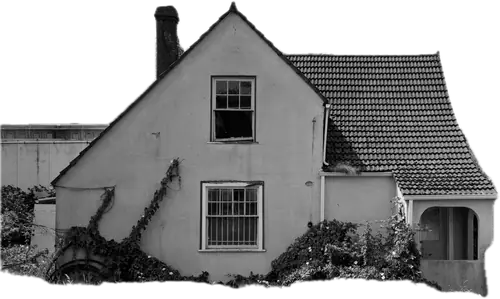
 keep
Under Washington’s middle-housing law, Seattle now allows up to four homes on most residential lots, and six on some.1 We think that is good news. The city needs homes, and a lot that held one family can now hold several.
The usual first step is less good. Before the new homes go up, the old house comes down.
Three things you can do with an old house
Wreck it. A machine takes a day or two. The house leaves as 25 to 30 tons of mixed debris, by our estimate, and its old-growth framing goes with it.
Take it apart by hand. This is called deconstruction. A crew removes the house piece by piece so the lumber, doors and fixtures can be used again. Portland, which has required it for its oldest houses since 2016, reports a carbon benefit of about 7.6 tonnes per house.2
Keep it. Repair the house, improve it and build the new homes beside, behind or above it.
We expected the second choice to be the green one. Then we ran the numbers for a typical 1,500 square foot Seattle house.
What the numbers said
By our working estimate, keeping the house avoids roughly 28 to 45 tonnes of upfront carbon. That is four to six times what taking it apart by hand would save.
The reason is simple once you see it. Reuse saves the carbon in the parts that get reused. Keeping the house saves the carbon in a whole new house that never has to be built, because the floor area already exists.
The parts of a kept house never move.
There is a practical side too. Reclaimed parts are hard to use. They have to be removed without damage, stored, matched to a new design and often approved by a building official who has no rule for them. A house that stays where it is skips all of that.
What it costs
Deconstruction is the expensive choice. By our estimate, taking a typical Seattle house apart and selling the parts costs about $19,000 more than wrecking it, and most of that gap is labor that no buyer of salvage will pay for.
Keeping the house can cost less than replacing it. Not always. Old houses hide surprises, and some are too far gone. But when it costs no more, the carbon savings come free.
What we don’t know
Our figure comes from typical values for new construction, not from a measured study of Seattle houses. It could be off. We have also not yet proved, on our own projects, how often a kept house fits well with three new homes on the same lot. Sometimes keeping it will mean fewer homes, and homes matter.
So, we are not saying every house should stay. We are saying the question should be asked every time, with numbers, before the excavator is booked. Every study we do now compares three schemes side by side: keep, add or replace.
The Japanese have a word, mottainai, for the regret of wasting something that still has worth. An old house on a valuable lot is not a teardown. It is a century of material and labor that someone already paid for.
Sources and notes
- Washington State Department of Commerce, Planning for middle housing, on House Bill 1110 (2023). ↩
- City of Portland, Deconstruction requirements. The per-house carbon figure is from a City of Portland and Oregon DEQ presentation. ↩
Drafted with AI assistance from the studio's working papers, then read, corrected and approved by Keith Cash, co-founder. Found a mistake? Tell us.